Understanding Josephus References to Midianites in Africa
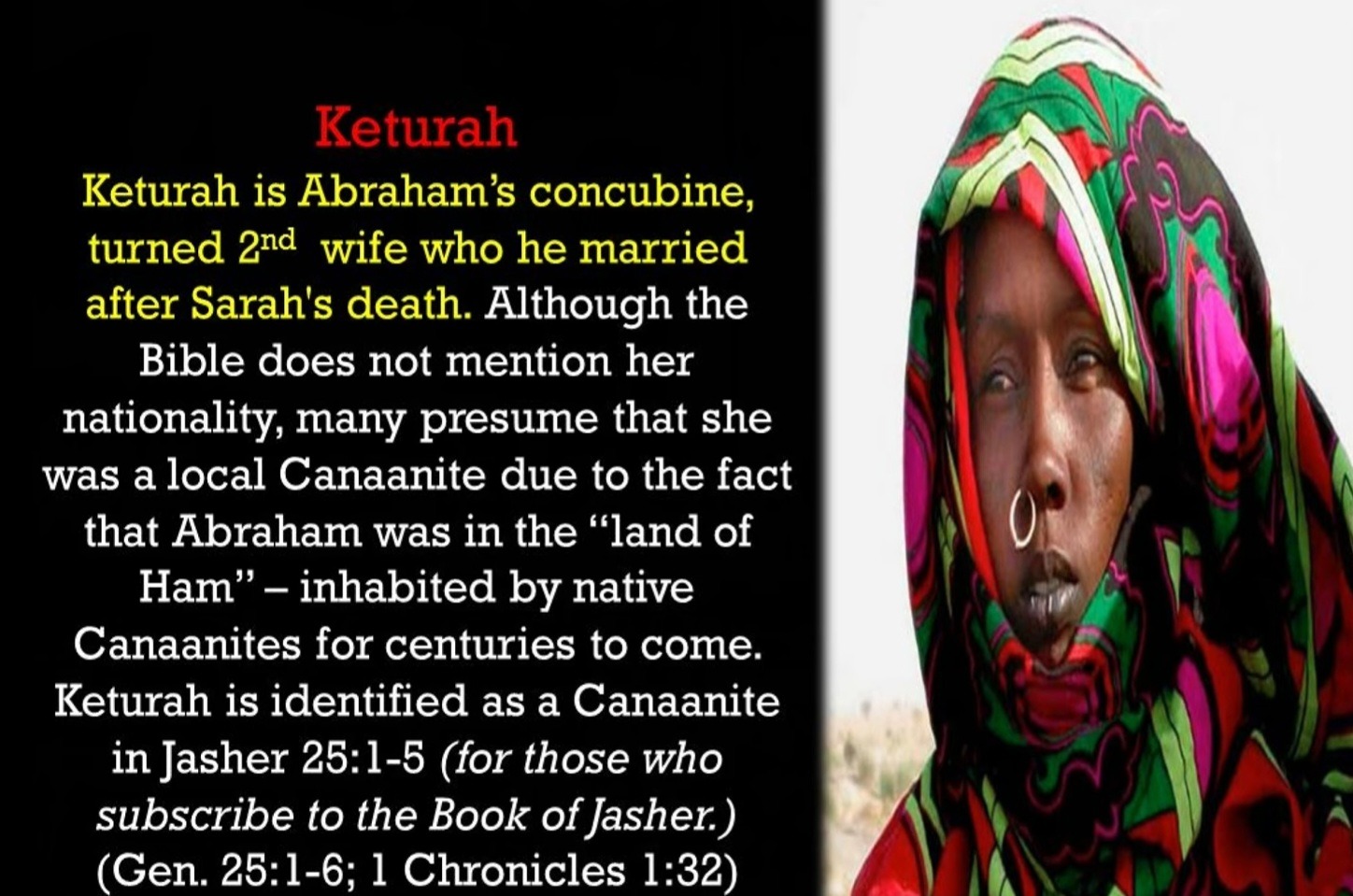
Our exploration starts with Josephus who following the Hebrew writings tells us that in his time the descendants of Keturah or Qeturah coming from southern Arabia had settled the area of the “troglodytes” in the Horn of Africa, which in Josephus' era was also considered part of "Arabia".
John Murray states the following.
“Josephus ('A.J.' i. 15) tells us that the descendants of Keturah occupied the Troglodyte country and Arabia Felix, which statement is repeated by Jerome ('Qu. Heb. in Gen.').” The Holy Bible according to the authorized version (A.D.1611) published 1872.
What Josephus, Jerome and others documented were numerous “Hebrew” clans in sub-Saharan Africa found under the eponyms reminiscent of both children of Hagar and Keturah of the Hebrew Bible. Apparently in Jewish esoteric tradition the names of Hagar and Keturah were synonymous, so to speak, so it should not surprise that we find the names of Hagar’s children are present as well among the early trogodytes. In the Bible the names of the children of both tribal ancestresses were in fact interchangeable, as seen in the story of Joseph son of Jacob, where the Ishmaelites - children of Hagar - are called synonomously "Midianites" from Keturah.
A passage of Genesis 37:8 reads - "so when the Midianite merchants came by, his brothers pulled Joseph up out of the well and sold him for twenty shekels of silver to the Ishmaelites, who took him to Egypt."
The occupants of the "Ethiopian" trogodyte region which refers to a region of the Horn of Africa and Sahara are still called by such names as Anfar or Afar in Africa or Afariyya, Maddhij and Madad on the other side of the Erythraean Sea in Arabia. In the Roman period in one region of the trogodytes of the Sahara and Northern Africa, a people called Pharusii are mentioned as the nomadic and half-naked. They possessed horses and chariots. Strabo asserted that a portion of them dwelt in grottoes or underground houses they built for themselves. These Pharusii, he writes, “appear to have partly lived to the west and partly to the south-east of the High Atlas. With their caravans they occasionally reached as far as Cirta.”(Cirta meaining the Syrtic or Sidra region of Libya).
According to the on-line Brill reference book their name in ancient sources is variously Persae, Perusii; Ptol. 4,6,17; Geogr. Rav. 43,10: Paurisi. Pliny places them next to the pastoral Nigritae or Nigritians, a people named for the Niger river (from which comes the people named Niger, Nigra or Negro).
It has been noted by several scholars of North Africa that these ancient Pharusii or Persae were ancestral to the later and modern Tuareg clans who were and still are called by the ethnonym Kel Iforas, (also Ifouran, Ifouren, and Ifouracen). And it has also been rightly stated that the name of the “Iforaces” mentioned by Corippus in the 6th century is recognizable in their modern designation. Explorer Heinrich Barth speaks of them in the colonial era as the Fares or Kel-Fares whom are mentioned with the Kel n-Neggaru (ancient Nigritae?) (Barth, 1857, p. 283). While apparently the pronunciation among the Tuareg was Afar’is according to Gaston Cauvet’s 1933 article “Les Touareg Iforas”.* ( The Tuareg clan of Iforas were a client tribe of the Hoggar Tuareg in Cauvet’s time.)
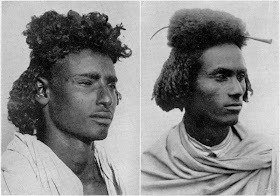
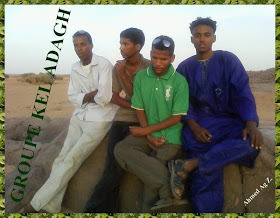
Young men of the Kel Adagh or Adar clan of the Iforas Tuareg
There would thus seem also to be a connection between the names of these tribes of Ifouran or Iforas and those peoples named Aphran or Aphras that an ancient Jewish Roman named Josephus claimed had colonized Africa from Arabia. He wrote, “Now it is said that this Aphren made an expedition to Libya and subdued it and his grandsons having settled there called the land Africa after his name … ‘But Cleodemus the prophet, who is also called Malchus, in narrating the history of the Jews even as Moses their Lawgiver has narrated it , says that by Chettura Abraham had many sons: and he also mentions their names, calling three of them Afer, Assur, and Afran.” (Libya of course was the ancient name mainly for northern Africa in general.)
According to Pliny, Pomponius Mela, and Salluste, they had come “with Hercules” or Herakles from the East. The roots of this story are founded on the fact that a large part of the Horn of Africa as well as most of southern Arabia was considered a major part of "India". Josephus in fact spoke similarly about a connection between the peoples of Afra or Aphran and Hercules in chapter 15 of his Antiquities entitled, “Of the Nation of the Troglodytes, Who were Derived from Abraham and Keturah”.
He wrote in that chapter - "Cleodomus the prophet... who wrote a history of the Jews in agreement with the history of Moses their legislator relates, there were many sons born to Abraham and Keturah who he names Apher and Surim and Japhran. From Surim was the land of Assyria denominated and that from the other two Apher and Japhran, the country of Africa took its name, because these men were auxiliaries to Hercules when he fought against Libya and Antaeus. And that Hercules married Aphra's daughter, and of her he begat a son Didorus..."
The Antaeus mentioned in the above paragraph was a famous ancestor hero of the ancient northern Africans. Max Mueller had noted, “The latter expression (Antyw Khentiu) is archaic”, and he also spoke of “the wandering Hamitic Trogodyte tribes of the ‘Arabian’ desert, whose name Enti, Anti, has been preserved by classical writers …” (Mueller, 1904, p. 138) (“Arabian desert” meaning the eastern deserts of Egypt and Sudan in the ancient and modern world).
The genealogies of the Tuareg and Shluh Berbers are also filled with king-rulers or ancestors named Herik and Herak. Traditional genealogy of the Tuareg lists one of their earliest ancestors as “Mazigh son of Herak, son of Herik, son of Bedian, son of Canaan”(MacMichael, 1922, p. 202).
He became the legendary hero "Herakles" or Hercules of Greek mythology. Herakles of the Moors is sometimes called “the Indian Herakles” by the early writers due to the Moors who were considered to have connection to the occupants of southern Arabia. (Southern Arabia was known as “India Minor” in the ancient world.)
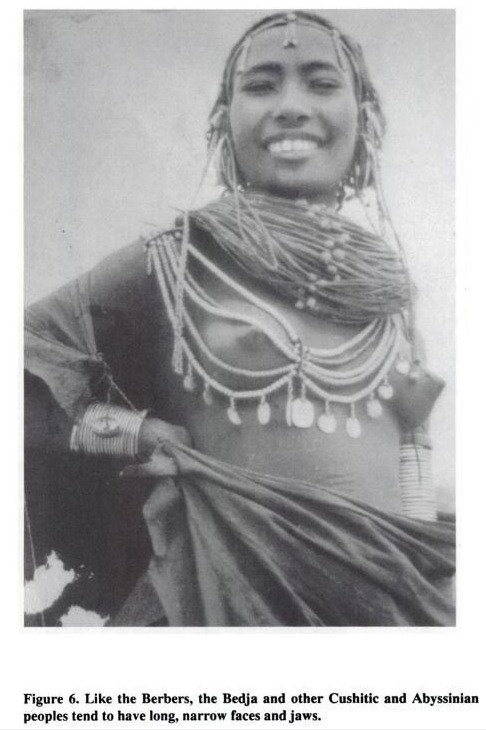
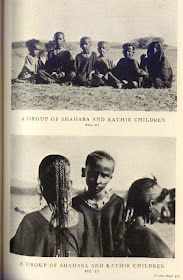
Unlike the book of Genesis which makes Midian the father of Afran (of Afar), Asur, Yudadas, etc., Josephus makes his biblical brother Madan their ancestor. These references to tribes of Midian, Madan, Assur, Afer, and Sophae also represent the names of ancient Berber nomads of Nubia, Sahel and Sahara and of coastal East and North Africa. They had once been settled in "Arabia" an ancient name for both sides of the Red Sea, and are now represented by various clans of Tuareg, Beja and Afar (also called Danakil) and other Africans of the Horn.
Modern man of the Afar or Danakil
The name of Ashurim or Surim is also explainable. The Romans who had colonized parts of North Africa had been engaged for several years in a low-level war “against two nomadic tribes, the Maketai and the Ausuriani” (Millar, 2006, p. 60) who unlike the Pharusii were camelmen. According to historian David Mattingly, the first were known in texts as “the Muctunia manus (from the deserts of Tripolis)”. The second of these are the Austuriani of the 6th century observer Corripus (Mattingly, p. 290 and 293). Sergi has used the word Micatani (Sergi, 1909, p. 50). Imakitan is still the name for the modern Kel Owey and Kel Assatartar Tuareg tribes of the Ahir region of Niger (Giazzi, 1996, p. 579)
Tuareg of the Imaketan clan of Kel Owey in modern country of Niger lead their camels. They are also early on known as Ukutameni or Kutama Berbers.
As for the Ausuriani (also written Austuriani or Austures) they are also the raiders and nomads of Tripolitania known to Ammianus Marcellinus of 4th century (Roque, D., p. 669) dwelling on the outskirts of Roman Africa in southern Tunisia which they raided from time to time. Ptolemy refers to them as the Astacures in his Geography 4:3. Thomas Bowdich in 1821 noted, “The Astacures are found, in Ptolemy, on the confines of Tripoli, and again, south of the Niger” (Bowdich, 1821, p. 11). Still another rendering of the name in texts was “Saturiani” ( J. Desanges, 2011). (Curiously, or perhaps just coincidently, the name of the Austuriani (or Astacures and Saturiani) has some seeming resemblance to Kel Assatartar).
These Ausuriani are the people Josephus mentions as the Ashurim or Surim, child of Keturah, from Genesis. Eusebius writing of this states "and from Asur, Assyria was named and from the other two Afra and Afer. And these he says joined Hercules in his expedition against Libya and Antaeus..." Joseph as well asserted “Syrians are held to be named from Surim (i.e. Asshurim), who was the grandson of Abraham from his wife Keturah. The people whom the ancients called Assyrians we now call Syrians, making a whole name from the part.” (The use of the word Assyria or Syria dates from "Ammurru" tribal settlement in the Levant).



 chicago.academia.edu
 afroasiatics.blogspot.com



 archive.chs.harvard.edu