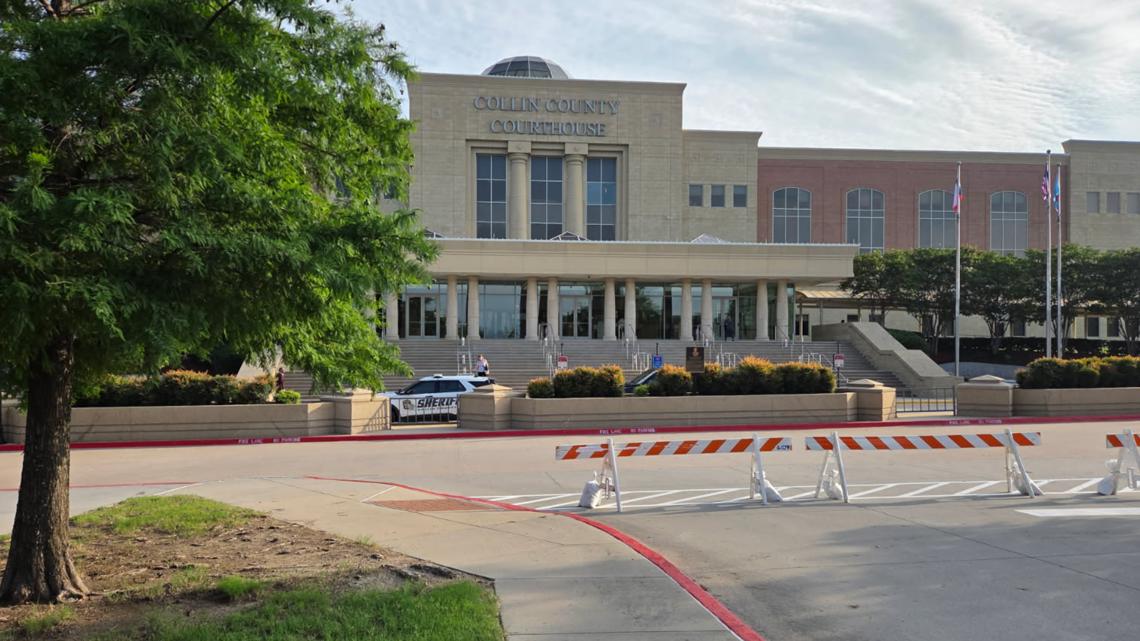
The trial of Anthony, accused of killing Austin Metcalf, is expected to last two weeks. He faces up to life in prison if convicted. He has pleaded not guilty.

www.wfaa.com
Jobin Panicker reports that Mitchell, the prosecutor continued to question potential jurors.
He went down a row of potential jurors and asked: “Will age [of the defendant] affect your ability to [render a true verdict]?”
A panelist answered: “I don’t think I can make a decision about somebody so young. One mistake, one argument, one conflict, you can’t say he’s a bad person.”
Several prospective jurors said “…this is not a good week.” Mitchell: “This may not be the trial for you.”
Karmelo Anthony is sitting next to his lawyer Mike Howard. There is a pad of paper, a pen, and a water bottle in front of him.
Attorneys and staff on both sides are writing notes after each and every answer from a prospective juror.
A panel member asks Mitchell "Can you define reasonable doubt?” Mitchell said he cannot, as it will be different for each person.
Mitchell then tackles the race question directly, asking person after person how they feel about this statement: "I don’t feel comfortable finding an African American male guilty of murder.” Because of the audio setup in the courtroom, it's unclear how they answered that question.
Mitchell asked the panel how they felt about this statement: “Race will affect my ability to determine guilt or innocence.” Again, their answers if any were not audible.
Mitchell: "In my 30 years [in law] I’ve never had this conversation with a jury before. We have to be honest about it.”
At one point he said: “I know nobody wants to be on this case.” People in the overflow courtroom laugh.
Mitchell reminds the panel that no one is getting “in trouble” with their answers. He asks again if they can put race aside and use the law and evidence to render a verdict.
10 a.m.
Jobin Panicker reports some of the back and forth as jurors answer questions from prosecutor Dewey Mitchell, the county's chief felony prosecutor and lead jury picker,
according to a commendation he received a few years ago.
Juror: "I have a son the exact same age of the defendant. I don’t know if that will affect me... What if that had happened to my kid?”
Mitchell asks for a show of hands. “Who has high schoolers?” It's unclear who, if anyone, raised their hands since jurors are not shown on the courthouse video feed which is, again, only broadcast inside an overflow courtroom at the courthouse.
A juror said she is an educator in Frisco ISD. “This is close enough to home, I am not confident I could completely be fair.”
Mitchell, to the jury pool: “How many teachers do we have?” Again, we do not know how many raised their hands, but Anthony and Metcalf were both in high school when the incident occurred, and educators will likely be called as witnesses.
A jurors said: “I don’t know if I feel right putting a brother in jail.” This draws a reaction in the overflow courtroom. Two men in front of Panicker shook their heads.
One juror said they have moral and religious beliefs that prevent them from sentencing someone.
Another is recounting an experience with their own child and possible bullying at school. Mitchell interrupts and says, “I’ll come back to you because I want to talk about self-defense.”
Mitchell then went over the charges. he said Texas doesn't classify murder by degrees like in other states. Texas has different names for different types of homicide: negligent homicide and manslaughter (which is assessed based on recklessness of one's actions), murder (intentional or knowingly taking of a life) and capital murder (murder plus committing another felony like robbery).
Mitchell: "What if someone says, ‘I didn’t mean to kill somebody?’” He asked jurors if they think that still constitutes murder. “There is nothing in the law that says I have to plan out to kill someone," Mitchell said. A panelist asks about premeditation. Mitchell said that may interest you during the punishment phase.
Mitchell told the pool that the lawyers are looking for people “who can render a true verdict based on the law and the evidence." He said at some point he will talk about what "sudden passion" means legally.